
Hotel Management and Booking Rooms
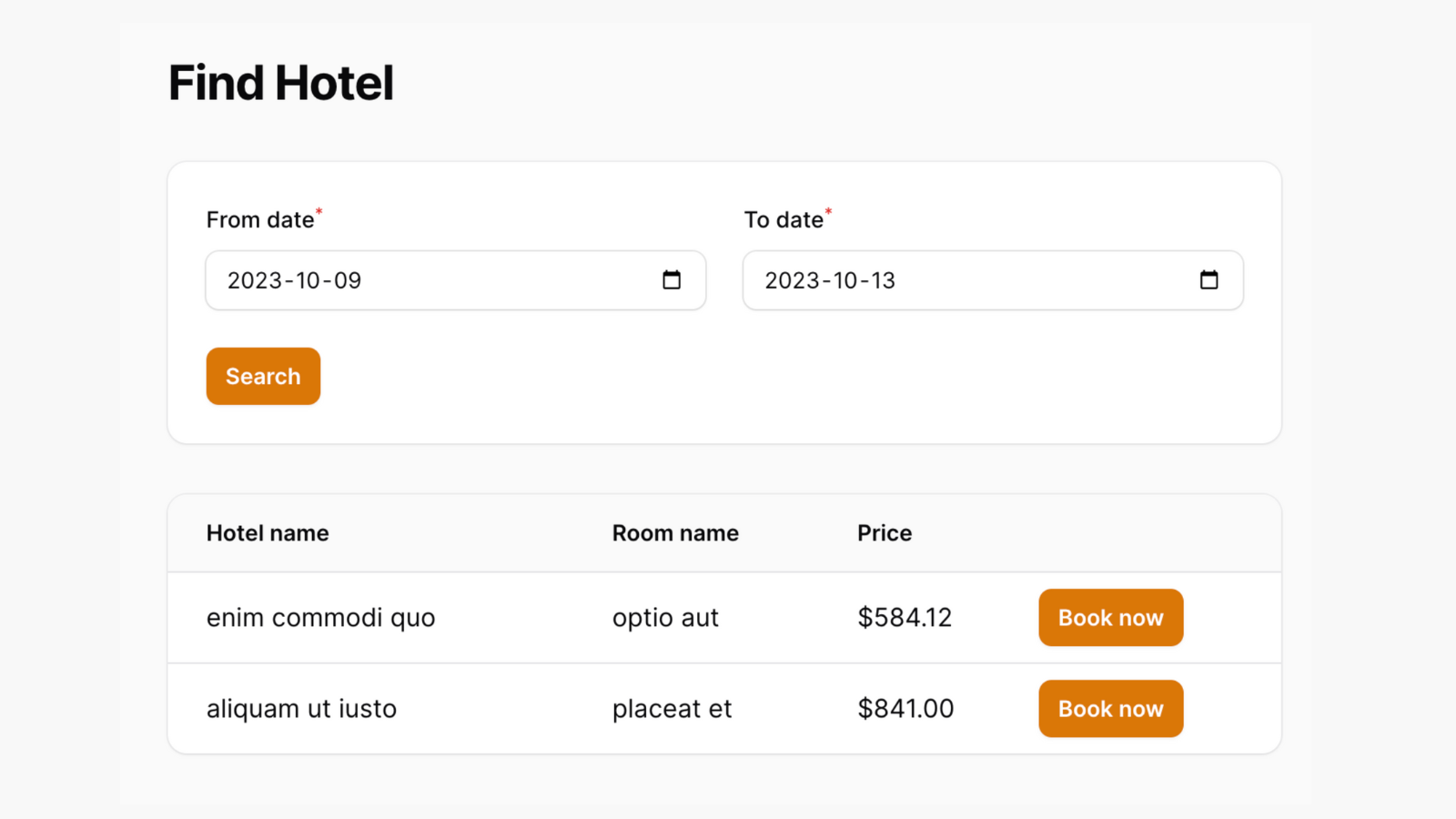
Filament 3This project demonstrates multiple panels in one Filament application: one for hotel management, and another for search and book hotel rooms.
Get the Source Code:
Only This Example
One-time payment
 Sign in with GitHub to buy
Sign in first, then complete your $9 checkout.
FilamentExamples Membership
30-day money-back guarantee
How it works
In this Filament Example project, we have two panels:
- Hotel, for managing hotel with rooms.
- Booking, for making a room booking.
When a user registers to any panel, they are automatically assigned a role based on the panel. It is done in Eloquent Events closures method in the User Model.
protected static function booted(): void{ static::created(function (User $user) { if (filament()->getCurrentPanel()->getId() === 'hotel') { $user->assignRole('hotels'); } if (filament()->getCurrentPanel()->getId() === 'booking') { $user->assignRole('customers'); } });}According to the role, the user gets access to a panel.
public function canAccessPanel(Panel $panel): bool{ if ($panel->getId() === 'hotel' && $this->hasRole('hotels')) { return true; } if ($panel->getId() === 'booking' && $this->hasRole('customers')) { return true; } return false;}Hotel Panel
In the hotel panel, we have a custom page, MyHotel, where users can manage information about their hotel. It is a HasOne relation to the Hotel Model.
public function hotel(): HasOne{ return $this->hasOne(Hotel::class);}The form is filled in the Livewire components mount() method. For the form, we use Filament Forms.
app/Filament/Hotel/Pages/MyHotel.php:
use Filament\Pages\Page;use Filament\Forms\Form;use Filament\Forms\Contracts\HasForms;use Filament\Forms\Components\Textarea;use Filament\Forms\Components\Checkbox;use Filament\Forms\Components\TextInput;use Filament\Forms\Components\FileUpload;use Filament\Forms\Concerns\InteractsWithForms; class MyHotel extends Page implements HasForms{ use InteractsWithForms; protected static ?string $navigationIcon = 'heroicon-o-document-text'; protected static string $view = 'filament.hotel.pages.my-hotel'; public ?array $data = []; public function mount(): void { $this->form->fill(auth()->user()->hotel?->attributesToArray()); } public function form(Form $form): Form { return $form ->schema([ TextInput::make('name') ->required(), TextInput::make('address') ->required(), Textarea::make('description') ->required(), FileUpload::make('photo') ->image() ->required(), Checkbox::make('is_published'), ]) ->statePath('data'); }}To add actions to the form, we use...