
Roles: Broker vs Investor in Single Panel
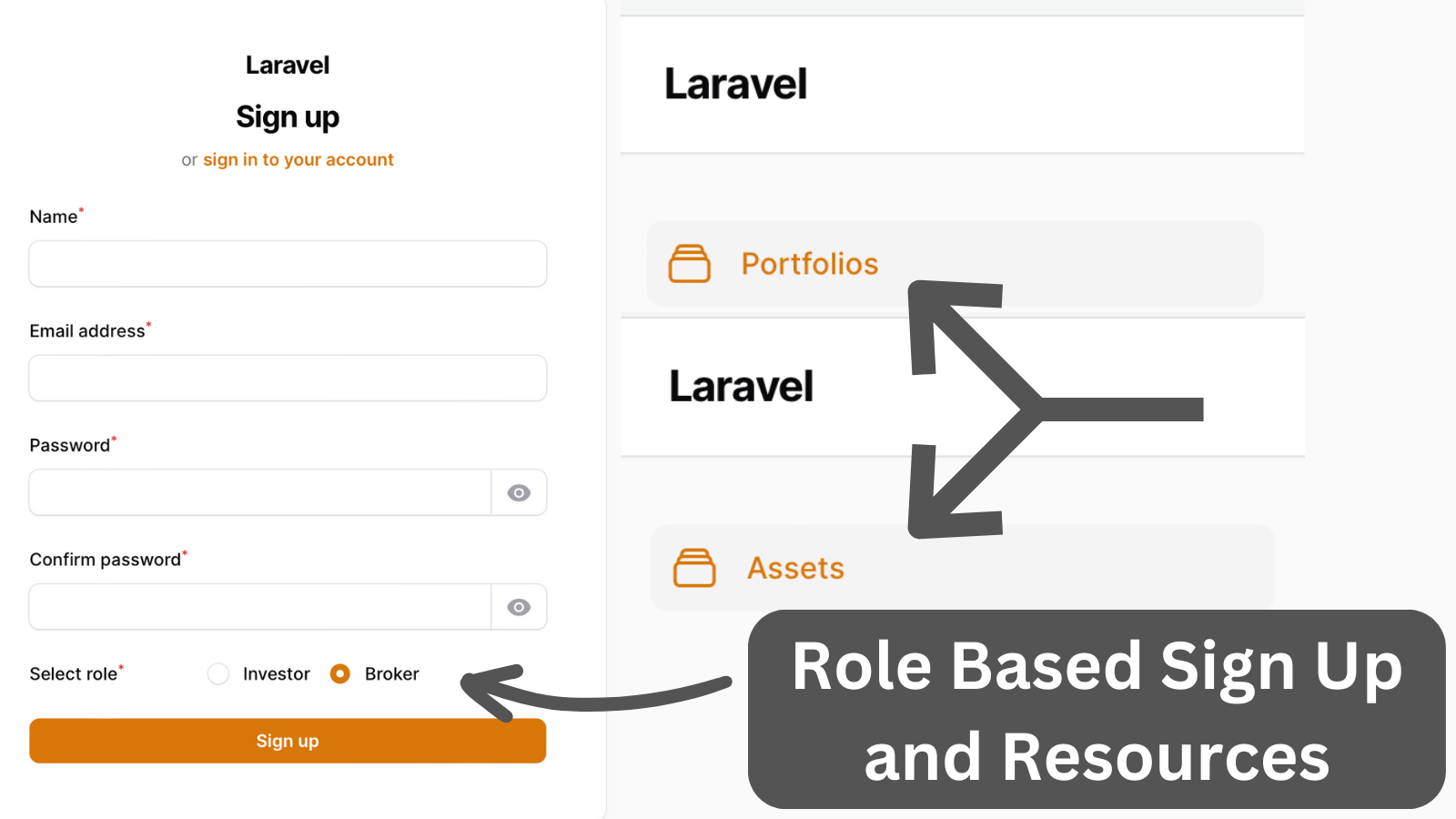
Filament 4/5Role-based registration where users see resources and records based on their selected role. Investors can choose brokers with whom they don't have portfolios yet.
Get the Source Code:
Only This Example
One-time payment
 Sign in with GitHub to buy
Sign in first, then complete your $9 checkout.
FilamentExamples Membership
30-day money-back guarantee
How it works
In the Panel Provider we enable registration and pass an action as our own custom registration page.
app/Providers/Filament/AdminPanelProvider.php:
use App\Filament\Pages\Auth\Register; class AdminPanelProvider extends PanelProvider{ public function panel(Panel $panel): Panel { return $panel ->default() ->id('admin') ->path('admin') ->login() ->registration(Register::class) // ... }}The registration page must extend the registration page from the Filament. In the register page, we add a radio select field for the role and set the default role to the Broker.
App/Filament/Pages/Auth/Register.php:
use Filament\Schemas\Schema;use App\Models\Role;use Filament\Forms\Components\Radio;use Filament\Forms\Components\Field;use Filament\Forms\Components\Component;use Filament\Auth\Pages\Register as BaseRegister; class Register extends BaseRegister{ public function form(Schema $schema): Schema { return $schema ->components([ $this->getNameFormComponent(), $this->getEmailFormComponent(), $this->getPasswordFormComponent(), $this->getPasswordConfirmationFormComponent(), $this->getRoleRadioFormComponent(), ]); } protected function getRoleRadioFormComponent(): Field { return Radio::make('role_id') ->label('Select role') ->required() ->inline() ->exists(Role::class, 'id') ->options(Role::pluck('name', 'id')) ->default(function (Radio $component): int { return array_search('Broker', $component->getOptions()); }); } }The user belongs to a role. Permissions are managed in the Policies by simply checking the user's role name.